
Carrying Water
Yarimar Bonilla on Puerto Rico’s compounding crises

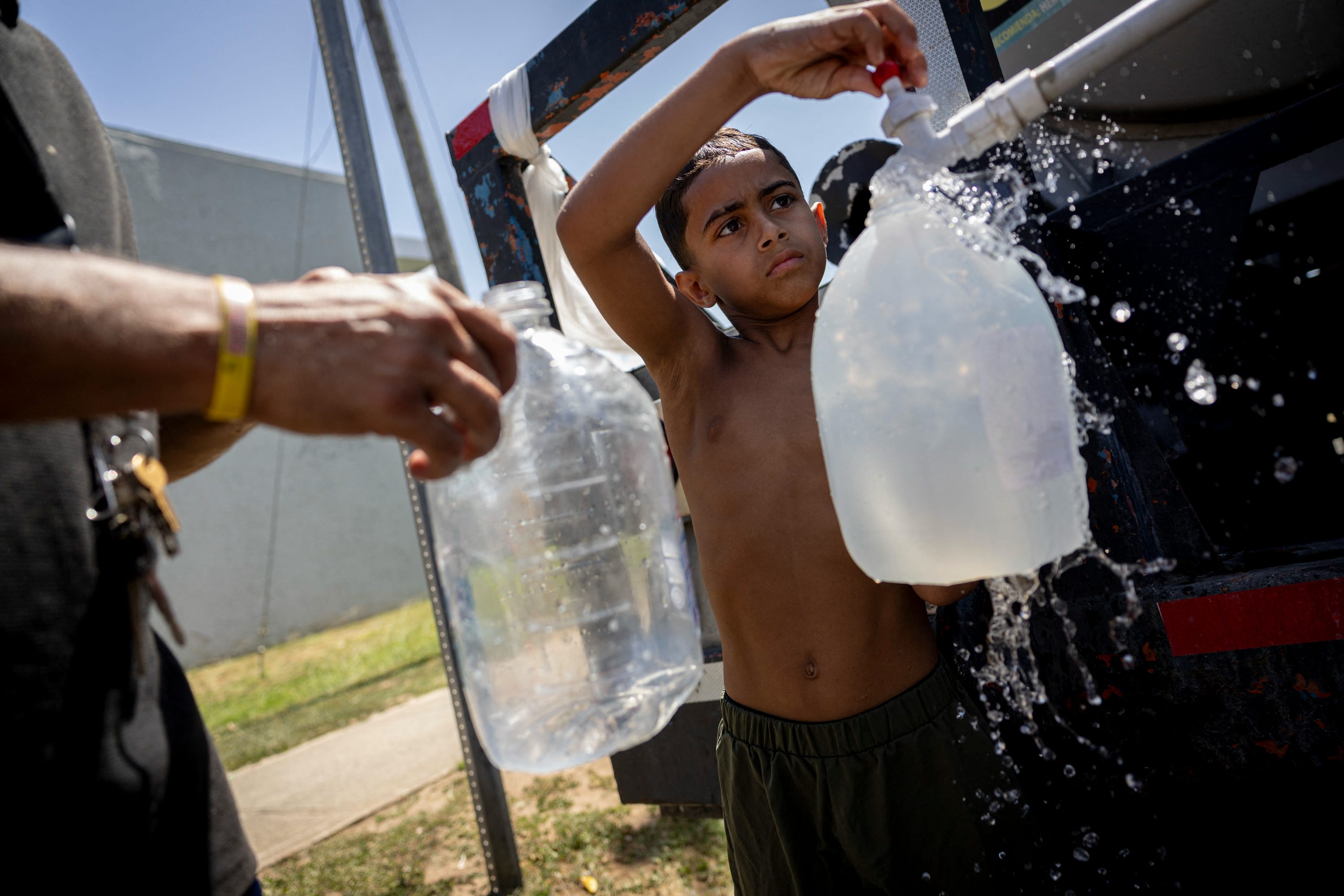
In San Juan, people are once again bathing with buckets. Water outages have reshaped daily life, forcing residents to improvise plans for once-basic tasks: finding public oases, filling water drums, hauling heavy containers up flights of stairs to flush toilets, or coordinating with relatives in neighboring towns to shower and do laundry. Restaurants have reduced their menus. Bars without working restrooms direct customers to portable toilets, and some businesses pay private companies thousands of dollars a week to refill their cisterns. Others simply hang signs on their doors: closed due to lack of water. Tourists post TikToks about the discomforts of vacationing in a city without running water, while emptied-out hotels mull temporary closures.
What began a year ago as a seemingly isolated set of infrastructural failures has metastasized into a prolonged crisis. Last July, a major pipeline connecting San Juan to the Carraízo reservoir ruptured, leaving much of the metropolitan area without water and prompting Governor Jenniffer González-Colón to declare a state of emergency. Though she initially blamed the damage on private contractors, the investigation she commissioned found failures within the state-run Puerto Rico Aqueduct and Sewer Authority, including its inability to identify the underground pipeline’s location for contractors and wider deficiencies in infrastructure, management, and operations. The report called for extensive reforms: more money toward maintenance and system monitoring, the filling of critical technical vacancies, and stricter oversight of contractors and emergency repairs.
Evidently satisfied that the recommendations constituted sufficient progress, González-Colón quickly declared the crisis overcome. Meanwhile, the outages continued. This June, more than 112,000 customers across nine municipalities lost access to running water entirely. The Aqueduct and Sewer Authority had detected a drop in the volume of water reaching the distribution system, suggesting that water was being lost somewhere along the transmission line. But it was only after Bayamón’s concerned mayor deployed drones over the North Coast Superaqueduct, which supplies much of the metro area, that the culprit—a rupture in the massive, six-foot-wide pipe—was discovered. As crews began repairs, two more breaks were found, followed by another in a connected line, and then another. Although repairs to those pipes were completed in June, service has remained uneven. Outages and rationing are still ongoing, and a comprehensive evaluation of the system is expected to take at least six to nine months.
Many residents have responded with the practiced humor of a people forced time and again to find levity in the face of hardship. In one popular comedy sketch, characters representing the water and electric utilities compete over which agency generates the most outages, rate increases, and public frustration, with the water authority gloating that it has finally surpassed the long-reviled electric company. My aunt joked that driving an hour after work to shower and fill containers at her son’s house gives her a wonderful pretext to see her grandson. My mom told me the outages are a nice excuse to linger at the mall and treat herself to food court fare to avoid doing the dishes. But for other families, the costs of eating out, buying paper plates, hauling clothes to the laundromat, and being unable to flush toilets or clean their homes are hard to joke about.
González-Colón eventually activated the National Guard to aid with water distribution, but the burden of caring for constituents has fallen mostly to beleaguered municipalities. After the water authority failed to provide a restoration timetable or an adequate alternative-supply plan, San Juan’s mayor sued the agency to recover more than half a million dollars the city had spent distributing water itself. Mounting public outcry and the threat of more lawsuits prompted tense local Senate hearings on the authority’s failures, with community members gathered outside to protest the government’s handling of the crisis and lawmakers inside calling for the agency head’s resignation. Both groups seemed to be consoling themselves with the idea that the disaster could be traced to a single act of bureaucratic failure: one neglected repair, one unreplaced part, one official who failed to do their job. Yet Puerto Rico’s latest crisis is not merely one of shoddy infrastructural maintenance. It is borne of a governing model, reinforced by a decade of federally imposed fiscal oversight, that manages scarcity for residents while creating abundance for creditors, consultants, political loyalists, and investors. When public services are treated as liabilities to be reluctantly contained rather than obligations to be fulfilled, disaster becomes routine.
Read the whole essay on BR’s website.